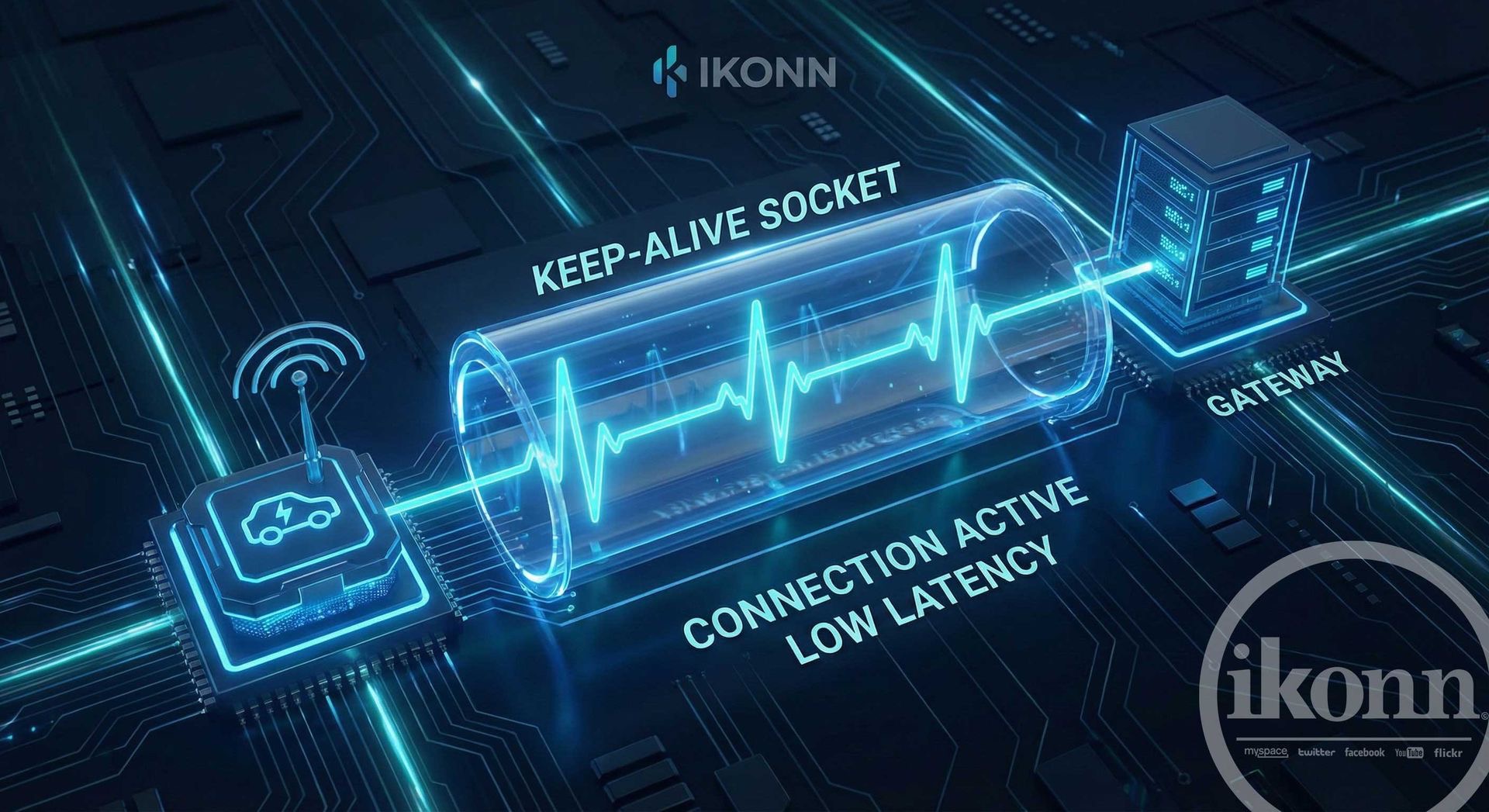
Keep-Alive configuration: Keeping the socket open with the Gateway
In high-performance tracking, silence cannot mean disconnection. Understand how Keep-Alive ensures that the path between the server and the vehicle is always unobstructed.
Keep-Alive: The Pulsar of Modern Telemetry
For an operation that demands a "fresh" state in every technological interaction, latency is the number one enemy. Keep-Alive is a minimalist data packet sent by the tracker to the server at regular intervals, with the sole purpose of informing the network infrastructure that the connection is still active. Without this constant "pulse," carrier firewalls and NAT (Network Address Translation) tables may consider the connection idle and terminate the communication socket without prior notice.
Socket termination due to inactivity is one of the biggest hidden problems in technical support. When this occurs, the tracker appears to be online on the map (based on the last trace), but becomes unable to receive lock or siren commands from the control center until it decides to send a new report. At Ikonn, we prioritize technical autonomy through the correct configuration of this parameter, eliminating the "command delay" that compromises security.
NAT Timeout: The Silent Enemy of Cellular Networks
Mobile M2M networks utilize complex systems to manage millions of simultaneous devices. To conserve resources, carrier gateways impose strict time limits for connections that do not carry data. If your tracker is configured to report only every 30 minutes and does not have an intermediate Keep-Alive, the socket will be closed by the carrier long before the next report.
By configuring Keep-Alive at strategic intervals (generally between 120 and 180 seconds), we ensure that the data tunnel remains "hot." This reflects Ikonn's pursuit of automation and efficiency: the system maintains absolute readiness without the need for cumbersome position reports, saving CHIP data while maintaining complete control over the hardware.
The Difference Between Network and Protocol Keep-Alive
It is crucial to distinguish between transport-level Keep-Alive (TCP Keep-Alive) and application-layer Keep-Alive (manufacturer status messages). While the former is managed by the radio module's operating system, the latter is a message configurable via SMS command or platform.
At Ikonn University , we recommend that technical support utilize the application's Keep-Alive feature, as it allows the Ikonn server to know exactly that the hardware is functional and ready to process the Rules Engine 's rules. Maintaining this clear distinction is what allows for flawless infrastructure maintenance, preventing network failures from being confused with hardware failures.
Impact on the Execution of Critical Commands
In emergency situations, every second counts. A lock command sent to a tracker with a closed socket will remain "pending" until the device establishes a new connection. In many cases, this can take minutes—enough time for the asset to be lost. With Keep-Alive configured correctly, the Gateway keeps the path open, and the command reaches the vehicle in milliseconds.
This socket stability is what allows Ikonn to offer a superior real-time control experience. It's automation technology working to ensure that the operator's intent is translated into instant physical action in the field, regardless of cellular network fluctuations.
Conclusion: Availability as a Strategic Differentiator
Setting up Keep-Alive isn't just a technical detail; it's a strategic fleet governance decision. By keeping the socket open, your control center ensures responsiveness and communication integrity. At Ikonn, we believe excellence stems from attention to these invisible details, transforming network complexity into a stable, resilient, and always-available monitoring platform.
IKONN SUPPORT: Keeping your fleet's pulse strong and connected.
Are your commands being executed instantly?
Consult our engineering team to optimize your fleet's Keep-Alive parameters and ensure your control center maintains 100% operational readiness.